By Rebecca Ivanoff
Across cultures and across time, farmers have learned from one another.
In Ontario’s early Black farming communities such as the Dawn and Buxton settlements in what is now southwestern Ontario, they built systems of shared labour and practical education to survive and thrive. Skills were passed neighbour to neighbour, field to field. The ethos was simple: each one teach one. Farming knowledge was not hoarded. It was shared so the whole community could stand.
In Indigenous communities, land-based learning has always been relational. Knowledge flows through doing, through planting and tending together, and through listening to Elders and to the land itself. Learning is reciprocal and carries responsibility to future generations.
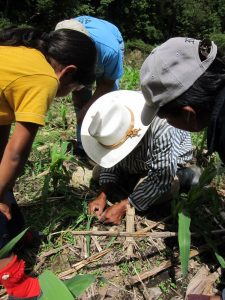 In Latin America, local farmer researchers, like those I’ve worked with in Honduras or the women farmers in the film Cubao es de ellas, continue this tradition by experimenting together in their own fields. Farmers design trials, observe results, and teach one another what works. Research and mentorship are woven into farm life.
My family came to the Toronto area from western and eastern Europe and brought with them seeds and knowledge of growing food. I recall my baba and dedo teaching me and my siblings to work the soil, plant seeds, harvest, cook manzha, and save seeds from tomatoes, as just a simple part of life.
Different geographies. Different histories. The same principle. Farmers and gardeners learn best with other farmers and gardeners.
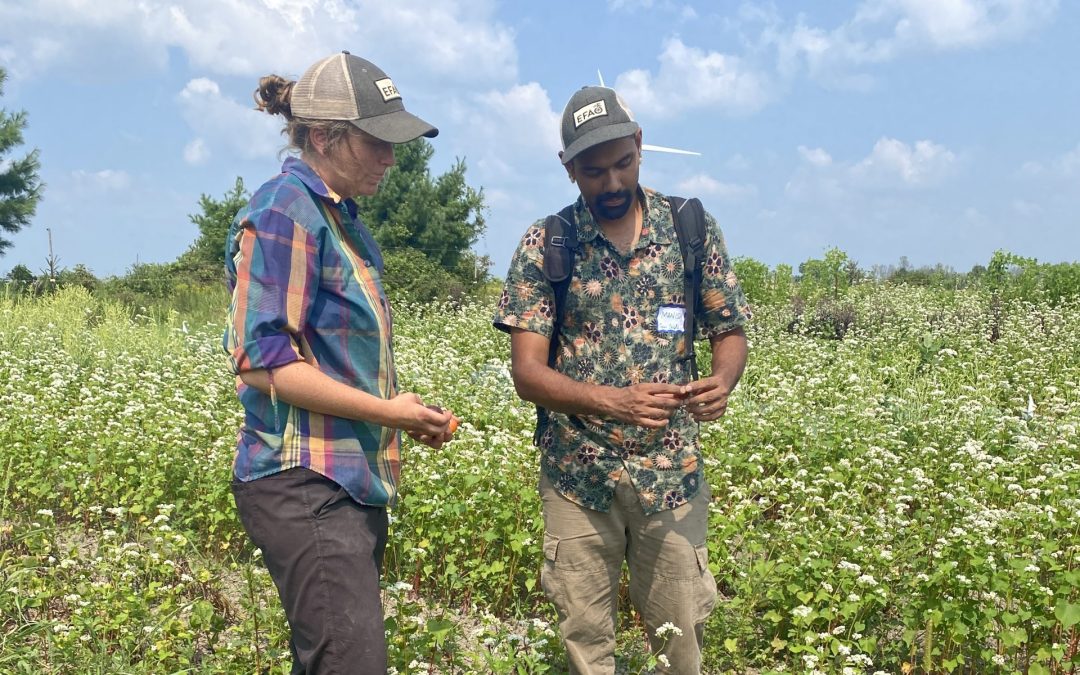
The EFAO Seed Mentorship Program, like many of EFAO’s programs, stands in this lineage. It is grounded in hands-on learning, relationship-building, and shared experimentation. Whether you are refining isolation distances, selecting for regional adaptation, or growing seed for the first time, mentorship makes the work lighter and the learning deeper.
Mentorship can be a space of reclamation, renewal, and connection. Agriculture carries deep and diverse lineages of foodways and stewardship that continue through the sharing of knowledge from one grower to another. Farming can also be isolating, and mentorship offers a way back to community. Sharing what you know, and remaining open to learning from others, restores purpose and strengthens the whole network of growers. You do not need to have all the answers to be a mentor. You simply need lived experience and a willingness to walk alongside someone else.
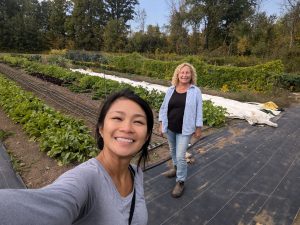
Seed work is slow work. It asks us to think in seasons and generations. Mentorship is the same. It builds capacity not just for one farm, but for a whole network of growers stewarding regionally adapted seed.
If you have something to share, consider mentoring.
If you are still learning, consider being mentored.
If you are both, even better.
Join the EFAO Seed Mentorship Program and be part of a long tradition of farmers teaching farmers.