By Angel Beyde
The history of Black farming in Ontario is one of resilience and generational strength. From the early 1800s onward, Black freedom seekers escaping slavery in the U.S. journeyed to what was then Canada West (now Ontario), determined to build lives rooted in land, community, and self-determination. Many arrived through the Underground Railroad and sought refuge on lands already marked by the forced displacement of Indigenous peoples. Despite systemic racism and colonial land theft, Black communities across the province built thriving agricultural settlements anchored in cooperation, education, and cultural pride often working in alliance and kinship with Indigenous communities.
The Dawn Settlement (Kent County), founded in 1841 by Josiah Henson, abolitionist, Underground Railroad conductor and community leader. Dawn became a centre of Black agricultural and educational life: residents purchased over 400 acres, built homes, a sawmill, gristmill, rope factory, and founded their own schools, like the esteemed British-American Institute, to educate the community’s children who were excluded from white-run schools. In nearby Dresden, archival records suggest Mary Ann Whipper Hollensworth helped establish schools, ran successful farms, and oversaw land holdings for her brother, U.S. abolitionist William Whipper.
These communities did not exist in isolation. In Dawn, Hamilton, and beyond, oral histories tell of Wendat and Six Nations families who offered farming knowledge, refuge, and political support to Black arrivals.
The Buxton Settlement (Elgin County), founded in 1849 by Reverend William King, became a model of self-governance and academic achievement. Mary Ann Shadd Cary, trailblazing journalist, publisher, educator and abolitionist, had family who farmed in North Buxton. She championed Buxton’s development, promoting land ownership, farming, and education as key tools of Black liberation. She emphasized the essential role of women in sustaining these communities.
In Amherstburg (Essex County), a crucial landing point on the Underground Railroad, census data indicates nearly 40% of residents by the mid-19th century were Black. Families farmed, ran businesses, and built institutions like the Nazrey African Methodist Episcopal and First Baptist Churches. Julia Turner, daughter of formerly enslaved parents, became a schoolteacher at age 14 and went on to own land, rent properties and run enterprises, exemplifying the economic leadership of Black women. Nearby Ojibwe, Potawatomi, and Wendat communities aided with river crossings, crop exchange, and mutual defense.
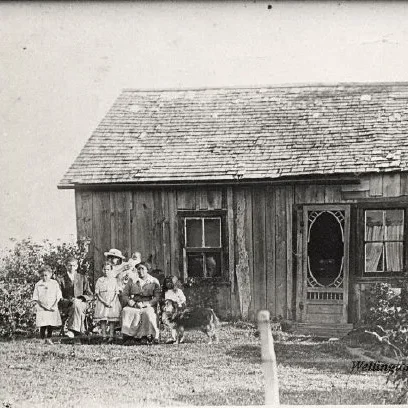
In the Queen’s Bush (present-day Waterloo and Wellington Counties), between 1,500 and 2,000 Black families, many women-led, cleared and cultivated land without formal titles. They built prosperous farms, churches, and schools starting in the 1820s. Educator and abolitionist Fidelia Coburn, known as a “singularly dedicated young woman”, raised funds and built a log school and an orphanage for Black children at Mount Pleasant Mission. By the 1850s, however, the Crown began to violently dispossess these families through discriminatory land policies like racist land surveys and denial of deeds, as well rigged auctions, forcing many off land they had lived on for decades.
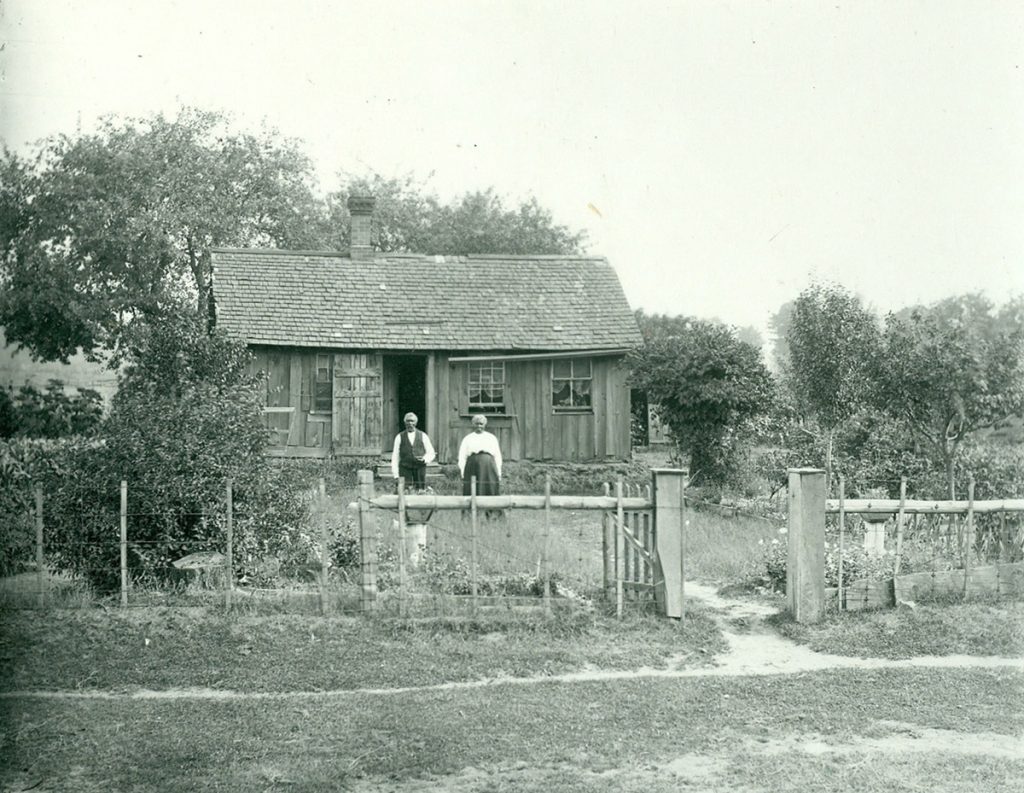
Lloyd Graves, who fled enslavement in Kentucky via the Underground Railroad, stands with his wife, Amanda, at their home in Mount Salem. Photo by Wilfred Smith. Source: Hugh J. Sims, History of Elgin County, Vol. 2.
Further north in Oro Township (near Barrie), Black veterans of the War of 1812 were granted rocky, remote land as a gesture of inclusion and recognition for their service. Though the land was poorly suited for farming and support was minimal, individuals like Mary Ann Woods, a widowed landowner, showed remarkable perseverance and resilience, maintaining her farm well into the 1850s. Over time, however, white settler encroachment, systemic racism, and state disinvestment led to the erosion of these communities, with burial grounds and homesteads left unprotected or erased.
Oro’s Black agrarian legacy survives through landmarks like the Oro African Methodist Episcopal Church, built in 1849 and now a restored National Historic Site. Descendants and local groups continue to preserve the remaining cemeteries and historic sites, keeping this important history alive in Ontario.
When we honour Juneteenth and National Indigenous Peoples Day, we remember that Black and Indigenous peoples on Turtle Island have long supported one another in the face of colonial violence. We hold these stories with care for both the grief and terrible losses endured but also strengthened by our roots of generational resistance: seed saving, land stewardship, mutual aid, and institution-building led by freedom-seeking Black women and supported through Indigenous kinship. Our shared legacies of resistance, refuge, and renewal inspire ongoing movements for land justice, food sovereignty, and liberation today.
It’s important to note that while legal discrimination in land ownership “ended” formally in 1950 in Ontario, the struggle for equitable access to land for Black families continues through modern zoning battles, eviction disputes, and historic title clearing efforts. These stories highlight not only the persistence of structural racism, but also the power of legal and community resistance still unfolding in our time.