A review from the documentary screening
By Lily Phan
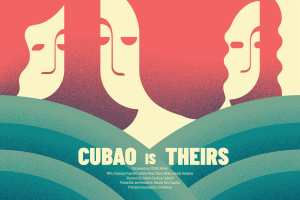
“Cubao es de ellas” (“Cubao is theirs”) is a documentary about four Cuban women farmers and their journey from subordinate farm wives to agricultural leaders in their community, and is the culmination of a four-year project at the University of Guelph with the goal of advancing gender equity in agricultural sciences. The women farmers travelled from Cuba to Ontario to attend the premiere screenings in Guelph and Toronto. I was privileged to meet them at the Toronto film screening.
The gender equity project was part of a larger 20-year partnership between the University of Guelph and the Agrarian University of Havana, centered around agroecological production. At the beginning, the partnership worked mainly with Cuban male farmers because men are often the “official” farmers and landholders in Cuba. However, it became apparent after several years that the partnership was overlooking the vital but invisible role that women were playing on Cuban farms.
Although male farmers are the public face of their farms and hold formal membership in Cuba’s many agricultural cooperatives, it is their wives and mothers who make crucial strategic and operational decisions behind the scenes. In 2008, the Canadian-Cuban agricultural partnership opened a gender equity component and invited 35 women farmers across Cuba to take part.
While the documentary focused on the Cuban women’s growth into strong community leaders, it also contained tantalizing tidbits of agroecological information. In the film, Maria Valido, one of the farmers, makes a brief remark about using tobacco midribs in her fields after successive crop failures due to disease. Afterwards, I followed up to ask her, what was the result of that experiment? It was a success! She explained that the tobacco midribs made an effective fungicide. The film showed the midribs layered on top of the soil a few inches deep. I wanted to ask her if she incorporated any of it into the soil itself but as there were language barriers and many other people waiting to speak with the women farmers, I didn’t get a chance to monopolize her attention.
I did get to ask the other women farmers about their weed management strategies, as the farmers neither used chemicals nor plastic sheets on their farms. They informed me that they did all their weeding by hand but let the weeds grow freely to some extent. They view weeds as an important part of the field ecology, helping to shade the soil and roots from the hot Cuban sun and minimize evaporation. To my question of how they managed competition for resources, one of the farmers, Felicia Mesa Perez, replied that in her experience, the crops and the weeds worked out their own balance. I am skeptical but that only makes me want to visit their farms and see it with my own eyes. A five minute conversation is not enough!
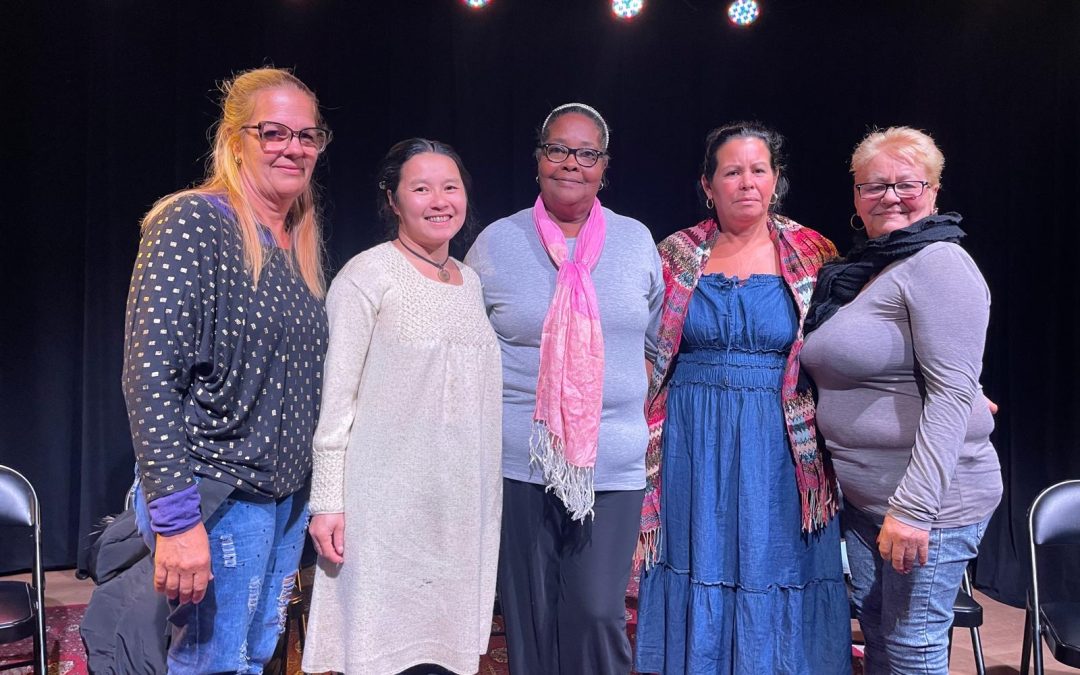
Lily with the Cuban farmers at the Toronto screening. From left to right, Anoida Guillama, Lily Phan, Felicia Mesa, Damarys Puentes, Maria Valido.
Although the gender equity project is finished, the relationships and networks formed during that time remain strong and vibrant. The women farmers have a fundraising campaign to raise money for solar equipment to help power their farms and communities. They encourage all donations to be sent to cubaoesdeellassolidarity@gmail.com.
“Cubao es de ellas” is a timely documentary showcasing four Cuban women farmers who are at the forefront of agroecology efforts in the island nation of Cuba. The documentary is timely not only because the United Nations has declared 2026 the International Year of the Women Farmer but also because of the United State’s current economic siege of this tiny country. At a time when smaller nations suffer from the aggressive ambitions of more powerful nations, it is heartening to see the resilience and strength of women farmers as they feed and uplift their communities.
Lily Phan is an EFAO member who runs an urban ecological farm in Toronto with her family. They grow Asian vegetables and herbs; make traditional hot sauces and Vietnamese fusion snacks; and monetize their weeds. Lily surfs the wastestream of society and believes farming can be a radical act of love and hope in a world full of fear.