
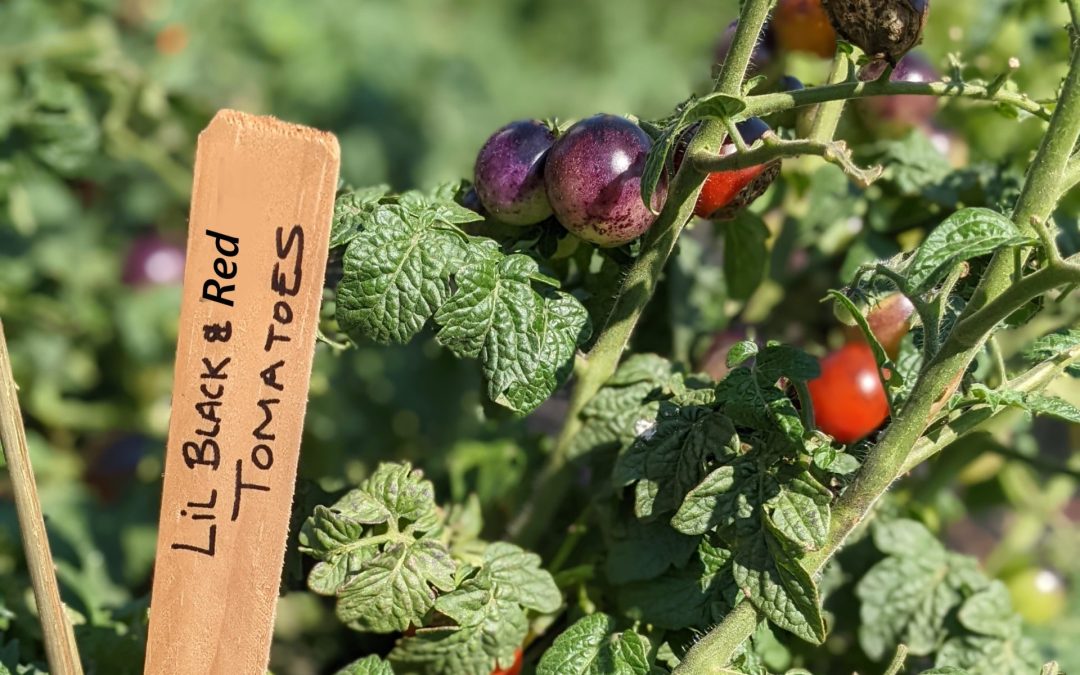
Meet Lil Red & Black — a dwarf cherry tomato that’s as stunning as it is delicious! Bred locally in Ontario by Vita Gaike & Duane Falk of Mimosa Breeding & Research, this red-and-black beauty is a sweet, classic-tasting alternative to GM purple tomatoes. Early-bearing, productive, and resistant to late blight, it shines in the garden, in containers, and on your plate!
by Rebecca Ivanoff
As genetically modified garden seeds begin to appear in Canada, growers may want to take a closer look at how these changes can affect seed saving, organic production, and transparency.
In January 2026, genetically engineered (genetically modified, or GM) vegetable seeds officially entered the Canadian garden seed landscape. For the first time, GM seeds are being sold not just to large-scale commodity growers, but to home gardeners and small-scale farmers, including here in Ontario. This shift raises practical questions for ecological growers — particularly those who save seed or grow under organic certification — and highlights gaps in transparency that many growers may not be aware of.
What has changed?
Health Canada and the Canadian Food Inspection Agency have approved a genetically engineered tomato known commercially as The Purple Tomato™ for growing and eating in Canada. The tomato was developed in the UK, and is now being marketed by a U.S.-based biotech company. The tomato was and engineered to increase anthocyanins — compounds that give purple colouring to some fruits and vegetables (including many non-GMO purple tomatoes) — by inserting two genes from snapdragon flowers.
While some genetically engineered crops have existed in Canada since the mid 1990s (notably GM corn, soy, canola, and sugar beet), this approval is different in an important way: the seeds are being marketed to small growers and home gardeners.
Seeds of this GM tomato are already being sold to Canadian gardeners via company websites, and they could soon be sold by few small seed companies in local community seed fairs.
Why this matters for ecological and organic growers
Organic standards prohibit the use of genetically engineered seed. Beyond certification, many ecological growers and seed savers choose to avoid GM varieties for reasons related to seed sovereignty, biodiversity, and the ability to save and share seed freely.
Two issues make this moment particularly important:
1. Lack of clear labelling
There is currently no mandatory requirement in Canada that genetically engineered seeds be clearly labelled as such. Some GM seeds may be labelled, others may not. This creates a real risk that growers could plant GM seed unknowingly — and potentially save seed from those plants without realizing what they are working with.
2. Seed saving and unintended spread
Tomatoes are widely saved for seed. If GM tomato plants are grown unknowingly and seed is saved or shared, genetically engineered traits could move quietly through seed-saving networks, farmers’ markets, community seed libraries, and gardens. This poses a contamination risk for organic growers and for those stewarding heirloom or regionally adapted varieties.
What we’re seeing on the ground in Ontario
We are now aware of a small Ontario-based seed company that is reselling GM Purple Tomato seeds online and has indicated plans to attend seed events in 2026. Conversations through trusted intermediaries suggest the company intends to continue selling these seeds.
In addition, there is currently one known supplier of GM Purple Tomato seedlings to greenhouses and nurseries. While the tomato is prominently advertised, it is not labelled as genetically engineered on their website.
These developments mean that GM seeds and seedlings could appear in seed catalogues, nurseries, or local markets without clear identification unless growers actively ask questions.
What’s being done — and why it matters now
Ecological Farmers Association of Ontario (EFAO), as a member of the Canadian Biotechnology Action Network (CBAN), is working alongside farmer organizations, seed growers, organic associations, and environmental groups across Canada to respond to the emergence of genetically engineered garden seeds. CBAN brings together groups such as Canadian Organic Growers, the National Farmers Union, SeedChange, Organic BC, Greenpeace Canada, and regional ecological farming organizations to share information and support informed decision-making.
This work is taking place in a broader policy context where mandatory transparency for genetically engineered and gene-edited seeds is limited. While the Purple Tomato™ underwent government assessment, many newer gene-edited crops may not require pre-market review or public disclosure. As these seeds begin to enter small-scale markets, grower awareness and communication within seed networks are increasingly important.
What growers can do now
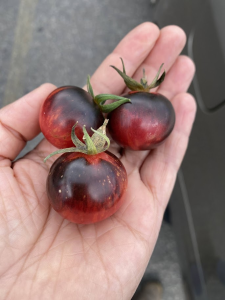
- Ask seed suppliers and nurseries to pledge non-GMO, if they do not have clear commitments on their website. Ask them to make sure they are not sourcing GM Purple Tomato seeds from Norfolk Healthy Produce, or purple tomato seedlings from Raker-Roberta.
- Seek out vendors who clearly state a commitment to non-GM seed
- Be cautious about saving seed from unfamiliar varieties or plants with unclear origins
- If organizing or tabling at a seed event, clarify expectations with vendors ahead of time
- Share information within your grower networks so others can make informed decisions
Staying informed
EFAO will continue to share updates as this situation evolves. For growers who want a more detailed background, the Canadian Biotechnology Action Network maintains up-to-date research and alerts on genetically engineered crops and seeds in Canada. You can subscribe to their e-news at cban.ca/#subscribe.
This is a moment of transition in the seed world. Staying informed — and talking openly with one another — helps ensure that ecological growers can continue to make choices aligned with their values, their certifications, and their long-term stewardship of seed.