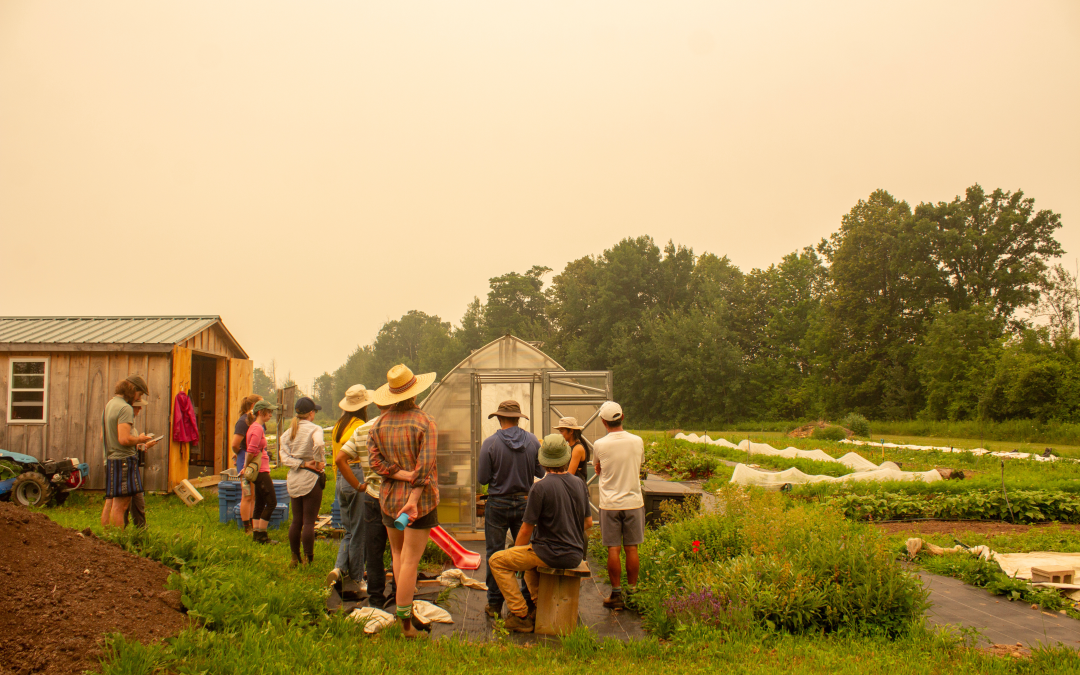
The skies hang heavy with wildfire smoke in the background of photos from last week’s field day at Lawoti Farms and Carabao Fields near Campbellville in Southern Ontario.
The smoke rolled into Southern Ontario on the morning of the event and it was difficult to know what the right call to make was, balancing safety while respecting the hard work of the farmers to prepare and the large group of participants who had showed up. In collaboration with the farmer hosts, we chose to shorten the day and cancel the work bee to reduce physical activity and prioritize attendees’ health. Avoiding work in smoky conditions is a privilege that the vast majority of growers, farmers and farm workers simply don’t have, especially in the height of growing season.
Despite the conditions, we spent the morning touring the farms together and having important discussions about the issues small-scale farmers are navigating—from extreme weather conditions, to the lack of affordable childcare, to labour challenges and more.
In Southern Ontario, extreme heat is increasingly common, but the intense impact of wildfire smoke is relatively new for many. However, the threats and impacts of wildfire in Northern Ontario are ongoing, with significant impacts on many Indigenous communities. Indigenous people make up approximately 5% of Canada’s population but account for 42% of wildfire evacuations across the country. In Ontario, nearly 2,000 people have already been displaced and with 180 wildfires currently burning across Northern Ontario, the need for support is urgent and ongoing. Our thoughts are with all of our members, the broader farming community, and especially those who are facing evacuations and the ongoing impacts of these fires.
As an organization and community, we’re figuring out what care and solidarity look like in this moment, and how to best support each other in these changing conditions. At EFAO, we return to our roots of education, resource-sharing and community support. Below is a collection of resources and ways that you can support relief efforts.
Emergency preparedness information & resources
- Government of Canada updates on the 2026 wildfire season preparedness and outlook
- Beef Farmers of Ontario: How to Prepare for Wildfires and Livestock Evacuation
- Ontario Sheep Farmers Emergency Management
- Ontario Animal Health Network: Wildfires and Emergency Management
- Occupational Health Clinics for Ontario Workers Inc.: Wildfire Smoke a Definite Concern for All Workers
- Thunder Bay Community Pasture: Livestock emergency assistance for wildfire evacuations
- Thunder Bay Community Pasture: Livestock Transportation Evacuation Checklist
- Workplace Safety & Prevention Services: 6 ways to protect employees from wildfire smoke
Ways you can help
- Agricultural Organizations Coordinate Wildfire Evacuation Support – coordinated emergency support and ways you can help
- Food Action Network shared on their blog several ways to provide financial support for those impacted by the fires. Read their blog here.
- Donations for Wildfire Evacuees in the Greater Toronto Area
- Namaygoosisagagun First Nation Response: Donations
- True North Aid
- Mikinakoos’ Emergency Fund