By Heather Newman
Even if you don’t qualify for traditional crop insurance, there are programs from Agricorp that might help you save your hard-earned money.
In the business of farming, it is rare to find places where a small investment of time and effort can yield financial returns. These government programs are designed to help mitigate the inherent financial risk of farming and are flexible enough to be useful to a range of farms. With tax season in full swing, it is a great time to determine if these programs can help you make the most of your hard earned money.
“There are not many programs that apply to vegetable producers, but AgriInvest and the SDRM for Horticulture have been very beneficial for my farm. I want to make sure everyone that could benefit knows about them”
-Angie Koch, Fertile Ground Farm
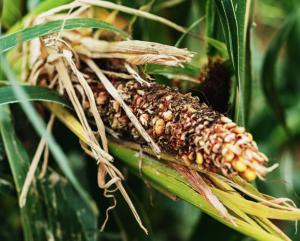 Agricorp delivers a suite of risk management programs under the Sustainable Canadian Agricultural Partnership. They include traditional crop production insurance and risk management programs, wherein you pay a premium each season to insure against low yield or low commodity price for a specific crop. If the value of your crop falls below a threshold percentage of the expected value, you can receive a payout to cover a percentage of the original value of that specific crop. This type of insurance can help reduce the inherent risk involved in farming, and is best suited to row crop farms, but similar programs exist for livestock. It should also be noted that all crop insurance programs can be applied to organic production and there is specific coverage for organic corn, soybeans, wheat, forage, spelt, processing sweet corn and fresh vegetables. You can find more detailed information on traditional crop production insurance programs at Agricorp.com.
In addition to traditional crop insurance, there are three other programs in the Agricorp suite that operate differently. They are more flexible and are often better suited for ecological farms that might be smaller or have a diverse range of crops and livestock. These programs are not applicable to supply-managed commodities. There’s also a land tax incentive that is applicable to some farms.
In brief, these programs include:
AgriStability: Similar to crop insurance, this policy insures your farm income as a whole rather than the yield of one crop.
“AgriStability covers large margin declines caused by production loss, increased costs or market conditions. If a producer’s margin falls below 70 percent of their recent average, AgriStability helps to offset the difference.”
– Agricorp
AgrInvest: A self-managed savings account with government fund matching that is designed to help manage income fluctuations inherent to farm businesses.
Self Directed Risk Management for Edible Horticulture (SDRM): An Ontario-funded risk management program specific for producers of horticultural products to help farmers manage risks beyond their control. Some farms could be eligible for both SDRM and AgriInvest, and the government matching income from these two programs combined each year can be quite valuable.
The Conservation Land Tax Incentive, currently offered by the Ontario government, is worth looking into if you have a portion of farmland that you are not farming for ecological reasons. You may be exempt from paying property tax on that land, if it qualifies for the program. If you have an area of ½ acre or greater with conservational value, like a wetland or endangered habitat, visit Ontario.ca and search for “Conservation Land Tax Incentive Program” to learn more.
AgriStability
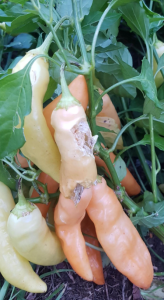 The AgriStability program is good for farms that can experience large declines in income caused by production loss, increased costs or market conditions. Similar to crop insurance, there is an annual fee or premium and you are eligible to make a claim if your income drops below a pre-calculated threshold. There is a significant amount of paperwork involved as it requires you to track detailed production information and income each year, but it could be beneficial if your sales prices suffers a significant decline or you experience a major crop failure — like the hail storms that hit southern Ontario in 2021.
To qualify for AgriStability, you must be reporting farming income or loss in Canada for at least one production cycle plus six months in the program.
How it works:
- New applicant forms and/or payment is due each year by April 30th.
- Your production margin is calculated by looking at your allowable income (commodity income) minus your allowable expenses plus your inventory adjustments.
- From that your reference margin is calculated based on your last five production years.
- If your production margin drops below 70% of the reference margin in a given year then a payment is triggered.
- In this case, Agristability will pay 80% of the difference between your production margin for that year and 70% of the reference margin.
- Cost: Fees for AgriStability are calculated using your reference margin. You pay 0.45% of 70% of the reference margin plus an $55 administration fee. For example, if your reference margin is $100 000 then the fee would be $370.
= (Fee reference margin x 0.45% x 70%) + $55
= $315 + $55
= $370
AgriInvest
All it takes to get going with AgriInvest is to file your taxes with a Form T1163 instead of the standard Form 2042. There might be a few changes required to your accounting system to manage this easily, but it could be well worth your time. Based on your income tax filings, your annual net sales (ANS) are calculated. You can contribute as much as 100% of your ANS to a savings account. The government will match the first 1%. For example if your annual net sales for the year was $60,000 and you put at least $600 in savings then you receive $600 in matched funds from AgriInvest.
You can access the money in your savings account at any time thereafter to invest in your farm, or you can save it for a time when you need to buffer income fluctuations. The matching funds are contributed by both the provincial and federal governments.
The set up process for AgriInvest takes a bit of work, but most of these changes will benefit you by increasing your financial knowledge. Once in place, it is easy to maintain an AgriInvest account and the rewards can be significant.
“The first year we were involved with AgriInvest, it was a bit of work to get the bookkeeping set up but it has been well worth our time since then!”
-Ryan Spence, Field Good Farms
AgriInvest is delivered by Agriculture and Agri-Food Canada (AAFC), but the application can be found on the Agricorp website.
Step 1:
- Apply for an AgriInvest ID number through Agricorp (contact@agricorp.com).
Step 2:
- File the appropriate tax forms at the usual tax deadline. For sole proprietors, instead of filing a T2042 or Statement of Farming activity you will file a T1163. This form has a more detailed breakdown of individual commodities and expenses. If your farm is incorporated you will need to file a Statement A to Agricorp instead.
- This information will be used to calculate your allowable net sales, ANS, for the year. You will receive a deposit notice to inform you of your maximum potential deposit. .
Step 3:
- Set up an AgriInvest savings account with your banking institution where you can deposit up to 100% of your ANS. Once you do, the government will match up to 1% of your ANS each year.
- You are welcome to withdraw the funds at any time from the account, at which time the government amount and any interest earned becomes taxable income.
Self Directed Risk Management for Edible Horticulture (SDRM)
This program operates very similarly to AgriInvest, but is a separate program that only applies to producers of horticultural products. There are 100 different products included, from nuts to potatoes. A full list can be found in the ‘Rates, Dates and Updates’ publication at Agricorp.com. If your farm grows at least one of the eligible commodities and has at least $5000 of allowable sales and a premise ID then this program is worth exploring. (A premise ID is free and not difficult to obtain. Find out more via the Provincial Premises Registry website).
Steps 1 & 2:
- Same as AgriInvest.
Step 3:
- You must set up a SDRM account with AgriCorp, (not your banking institution) where you can make a deposit based on your assessment each year.
- The Agricorp account does not earn interest.
- Government contributions are considered taxable farm income in the year that they are deposited.
Step 4:
- Eligible participants will receive a deposit notice in September of each program year.
- Deposits must be made by Feb 1st for the previous tax year.
- Government matching funds are partially added at that time, and topped up in June.
Step 5:
- Once the government has matched your funds you can withdraw the funds to use to mitigate risk or invest in your farm.
- A notice of withdrawal can be made to AgriInvest once a year by October 31.
Conservation Land Tax Incentive
You preserve an area of your property for its ecological significance, you could reduce your farm property tax with this program. The application is pretty straightforward and after the first year, reapplying is just a matter of signing a form and returning it.
Conservation land can include anything greater than ½ an acre of eligible land that you are committed to actively preserving. You need to be willing to allow inspection of the area if required. Lands can be considered eligible if:
- It has significant geological and biological features that are of natural and scientific interest. Find a full list at Ontario.ca (search for “protected areas”).
- It is designated a Niagara Escarpment Natural Area.
- It is a habitat for endangered species.
- It is a wetland of significance.
If your farm property includes old growth forest, lakes, rivers, wetlands or a culturally significant area then check out the government of Ontario to see if it might qualify for this tax incentive. You can find an interactive map of Ontario’s Natural Heritage areas at www.ontario.ca/page/make-natural-heritage-area-map.
“The Conservation Land Tax Incentive Program recognizes, encourages and supports the long-term private stewardship of Ontario’s provincially important natural areas.”
-CITIP, Ontario
How it works:
- Contact the program for an application form and submit it before the deadline of July 31st for the following tax year. Contact information-cltip@ontario.ca or 1-800-268-8959.
- If accepted, re-sign documents annually.
Farming is much more than a business, but the business component of farming has tight margins and inherent risk. It is good to know that there are a few programs out there that can help to create more financial stability in our ecological farms.
If you missed EFAO’s Finance February webinar series, please reach out to events@efao.ca for access! The third event in the series, Annual Accounting Tips and Tricks, goes into more detail on the application process and potential benefits of these programs as well as other tax preparation advice.
EFAO continues to focus on financial stability for ecological farming in Ontario. If you are interested in participating in our Vegetable benchmarking study or staying up to date on educational opportunities please use the QR code to fill out this survey.
Heather Newman is the Farm Viability Program Manager. She has deep roots in the agricultural community of Ripley Ontario where she grows food, family and community. Heather has a BSc from the University of Waterloo, is an active community volunteer, and runs a small farm and food business.