On this National Day for Truth and Reconciliation,
EFAO honours Indigenous Peoples, their families and communities, and the enduring strength of Indigenous cultures, foodways and relationships with land. We believe Survivors and reaffirm our responsibility to support Indigenous food sovereignty.
A note from Kara Tremblay, Traditional Economic Development Lead of Leading Cloud Gardens at Apitipi Anicinapek Nation, member of EFAO’s Indigenous Outreach and Engagement Steering Committee and collaborator on the Ontario Living Labs Initiative:
For me, Truth and Reconciliation is deeply connected to the land and to food. Colonization and residential schools didn’t just take Indigenous children away from their families. They disrupted our connection to our lands, languages, traditional foods, knowledge, families and ways of living and caring for one another. They tried to erase us. Those impacts didn’t disappear when the schools closed. We are still carrying them today, and so are our children.
That is a huge part of why this work at Leading Cloud Gardens means so much to me. This work created that safe place again for intergenerational healing and bonding. This work is an act of resilience. Not only did we survive, but we are thriving when we are caring for the lands, the waters and one another. Every time I see our youth with their hands in the soil, learning from an Elder or Knowledge Keeper, harvesting from the land and waters, saving seeds, growing traditional foods or learning how to feed their own people, I see something being reclaimed. I see our people, both young and Elder, reconnecting with things that generations before us fought so incredibly hard to protect.
To me, that is food sovereignty. It isn’t just about growing vegetables. It is about land, water, traditions, culture, knowledge, health, identity, our young people and our responsibility to the generations before us and after us.
And reconciliation can’t only be something we talk about on September 30th. It has to show up in the relationships we build all year long. It means listening to Indigenous people, making space for Indigenous knowledge and leadership, building respectful working relationships, and supporting Nations in doing this work for ourselves and in our own ways.
I have learned that meaningful reconciliation can look like recognizing the people already doing the work, building genuine relationships, listening and learning from one another, and helping provide the tools and support to keep that work moving forward. Because every seed planted, every teaching shared and every young person brought back onto the land is something reclaimed. It is resilience, healing and sovereignty — continuing what generations before us fought so hard to protect, for every child and every generation still to come.
Kitchimiigwetch.
Over the past year…
EFAO’s Indigenous Outreach and Engagement Steering Committee helped shape and guide this work. With their leadership, we continue to grow relationships, honour existing efforts, and support community-driven initiatives.
Together, we have:
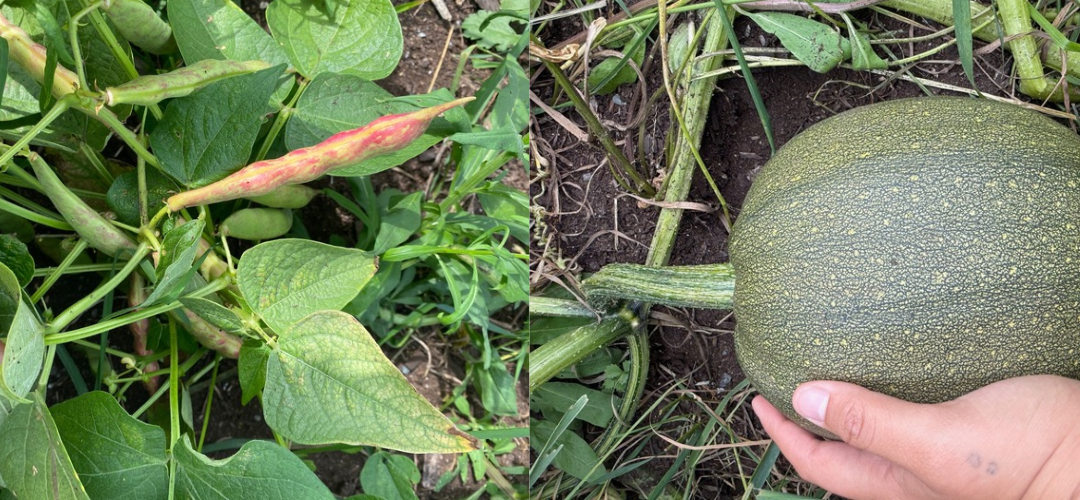
- Hosted a second annual Earth and Sky Gathering, opening EFAO’s annual conference with a full day dedicated to Indigenous voices, knowledge-holders, growers, and artisans. Read about one inspiring connection that emerged from the gathering, that supported the Rematriation of the Algonquin Pumpkin and Speckled Algonquin Bean.
- Collaborated with Leading Cloud Gardens at Apitipi Anicinapek Nation through the Living Lab-Ontario initiative, supporting the Nation’s broader food sovereignty work through testing ecological farming practices, building healthier soils and sharing knowledge around regenerative growing practices.
- Supported mentorship arrangements and soil testing for Indigenous growers, to strengthen connections between growers and land-based decision-making.
- Launched an Indigenous Food Forest Program that is supporting knowledge-sharing, mentorship and distributing $1.6M to Indigenous farmers, growers and communities across Ontario to establish food forests that strengthen ecological health, food sovereignty, and cultural continuity.
- Contributed to conversations and events in support of Indigenous food sovereignty in the north, including Northern Food Sovereignty Week and the Mamaw Kimiciminan Gathering hosted by the Sioux Lookout First Nations Health Authority in Thunder Bay, where EFAO facilitated a seed sovereignty circle and a Three Sisters cooking workshop.
- For this year’s staff retreat, EFAO visited Six Nations and helped Revitalizing our Sustenance install a new greenhouse.
What are you doing for National Day for Truth and Reconciliation?
Here are some ideas from EFAO staff:
-
Seedheads interview with Tiffany Traverse – Podcast featuring Tiffany Traverse, Indigenous seed and land steward at Fourth Sister Farm
- The Next Generation of Seed Keepers | The Aunties Dandelion – Podcast featuring Kanyen’kehà;ka Mohawk Seed Keeper Janice Brant
- The Hidden Power of Food – CBC Ideas podcast featuring Dawn Morrison, Working Group on Indigenous Food Sovereignty.
- The Right to Truth: Protecting Indian Residential School Records by the Yellowhead Institute (Evergreen Brickworks in Toronto, Sept 30, 3-5pm, and online)
- The Memoirs of Russell Moses, Residential School Survivor – video – Survivor family account of forced farm labour at Mohawk Institute.
- Michi Saagiig Nishnaabeg: This Is Our Territory – Oral history book by Anishinaabe Elder, teacher, and former Curve Lake First Nation Chief Gidigaa Migizi (Doug Williams), with Leanne Betasamosake Simpson. History, origin stories, diplomacy, resistance, and land relations of the Michi Saagiig Nishnaabeg.
- Manomin: Caring for Ecosystems and Each Other – A community-engaged analysis of Manomon (aka wild rice), weaving together the voices of scholars, chefs, harvesters, engineers, poets, and artists.
- Centre for Indigenous Knowledges and Languages – videos
- Talk Treaty to Me: Understanding the Basics of Treaties and Land in Canada – By Crystal Gail Fraser, Sara Komarnisky. Our roles, rights, and responsibilities as treaty people.
- Students by Day: Colonialism and Resistance at the Curve Lake Indian Day School
Donate to Indigenous-Led Initiatives!
Below is some information about a few of the incredible initiatives that we have had the honour of learning from and collaborating with:
- Gaagige Zaagibigaa is an Indigenous, grassroots led organization working to support Indigenous Sovereignty across Northern Ontario, Canada through food system transformation work. This is done through lasting reciprocal relationships with community partners, funding interventions across the breadth of community life, and wrap-around supports that help solidify and reinforce community efforts. Donations accepted here.
- Kenhte:ke Seed Sanctuary and Learning Centre is dedicated to growing heirloom and Indigenous seeds, including those specific to the Rotinonshyon:ni, and ensuring the availability of healthy, local seeds for the next seven generations. Donations accepted here.
- Leading Cloud Gardens is an Indigenous-led food sovereignty initiative of Apitipi Anicinapek Nation that has been collaborating with EFAO through the Living Lab-Ontario initiative. The work brings together growing food, land-based knowledge, youth development, traditional food systems and long-term food infrastructure. Leading Cloud Gardens is currently seeking funding partners to help continue and grow this important work.
- Mno Aki Land Trust is governed by a council of Indigenous Grandmothers, dedicated to conserving, stewarding, and regenerating lands and waters for future generations. Donations accepted here.
- Revitalizing our Sustenance is a grassroots, youth-led initiative dedicated to Haudenosaunee food systems and centering wellness in local Indigenous communities. Donations accepted through e-transfer to revitalizingoursustenance@
gmail.com