

- This event has passed.
Regenerative Grazing at Timberline Farm
Thursday September 24 @ 10:00 am - 12:00 pm
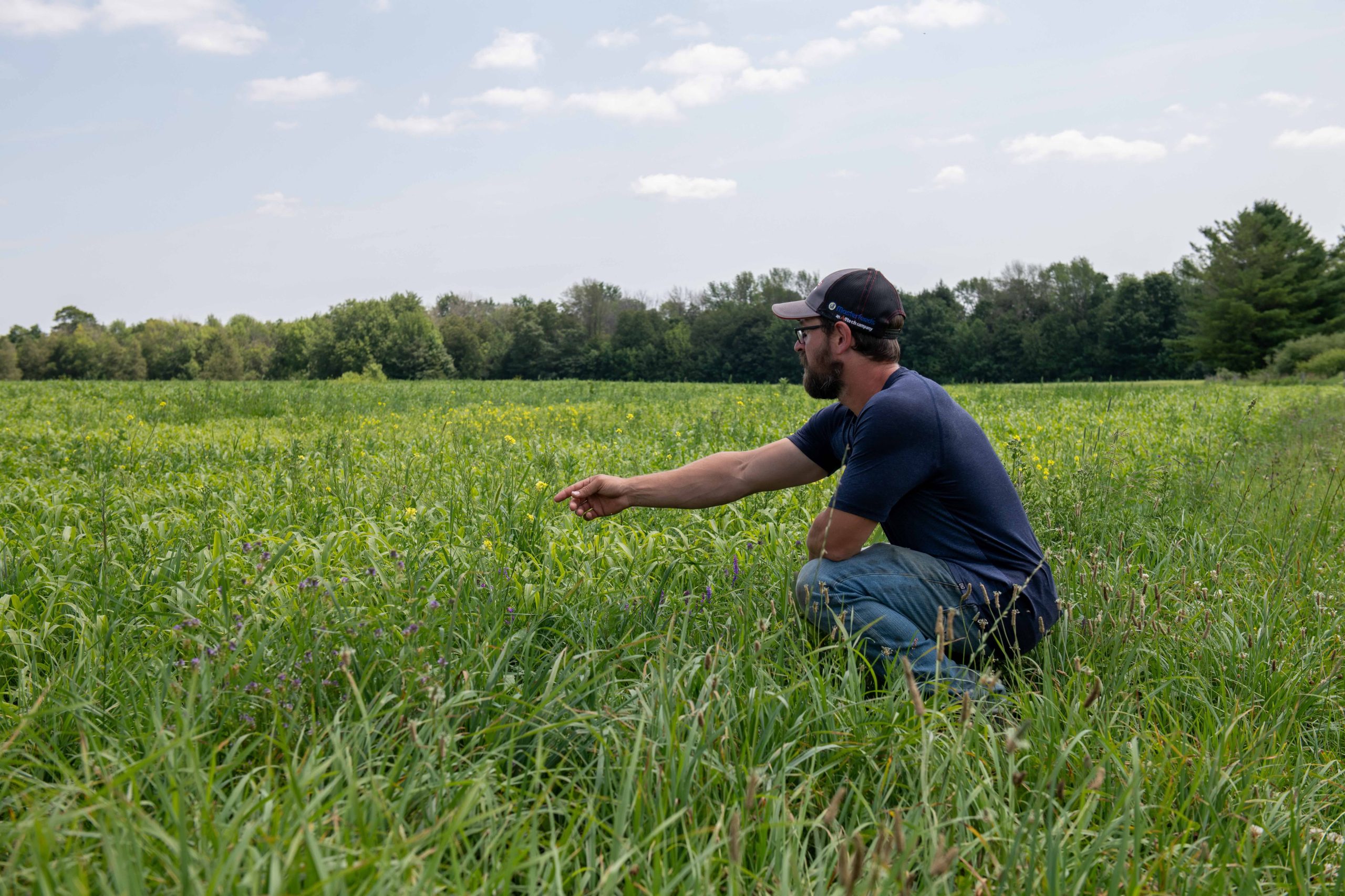
Jared James has been raising 100% grass fed beef at his farm near Harriston since 2014. Timberline Farm is 149 acres of mostly pasture, with 20 acres of forested wetlands, a sugar maple grove, and a large pond. It’s home to a herd of about 90 cows, 2 farmers, 2 horses, 4 cats, 4 chickens and a whole lot of nature. Join us on Timberline Farm for a tour and conversation about Jared’s pasture management, breed selection, grazing rotations and what makes this regenerative farm unique. He’ll also share about his Experimental Acres trial, a microgrant programme through the County of Wellington for farmer-led trials that aim to improve soil health and resilience to climate change. This year’s trial explores pearl millet as a cover crop/forage within a diversified mix.
At Timberline Farm the principles of permaculture and organic farming are used to create an environment where livestock and natural ecosystems thrive together. The farm’s forests and wetlands are an oasis for wildlife and the pastures provide valuable habitat to an abundance of grassland species. Using these pastures to ethically raise beef cows while enhancing the lands ecological value is the primary focus here at Timberline Farm. In fact, over 60 of this farm’s 149 acres are involved in wildlife habitat conservation initiatives. For ecological, environmental and practical purposes planting trees is the second focus on the farm; since 2014 they have planted over 3000 trees.
As cattle farmers, their goal is to grow grass and lots of it – meaning they focus on fertility and creating abundance in the pastures. And it’s not just the cows that benefit but there has been an increase in wildlife of every kind since they started managing the land in the regenerative way.
The cows at Timberline Farm are 100% grass fed and finished and of two main breeds: Speckle Park and Wagyu. The cows rotationally graze on pasture from when the grass starts growing in the spring until the winter comes and buries the grass in snow. In the winter they eat hay in the comfort of a 7200 square foot barn and can go out onto the 15000 square feet of outdoor yards as they please. Building a herd of well adapted cattle to the conditions of this grass based regenerative farming operation for direct to consumer sales of beef is the foundation of this farm’s success and future growth.
This event is hosted in partnership with Wellington County’s Experimental Acres programme and with the Farmers for Climate Solutions’ Farm Resilience Mentorship Program (FaRM). This event is an OSCIA-recognized Knowledge Sharing Event (KSE) for farmers with On-Farm Climate Action Fund (OFCAF) projects in the Rotational Grazing Category.
Want to make it a full day? Join us at Belwood Hills Farm to talk about pasture and silvopasture management from 1 to 3PM. More information and register here.